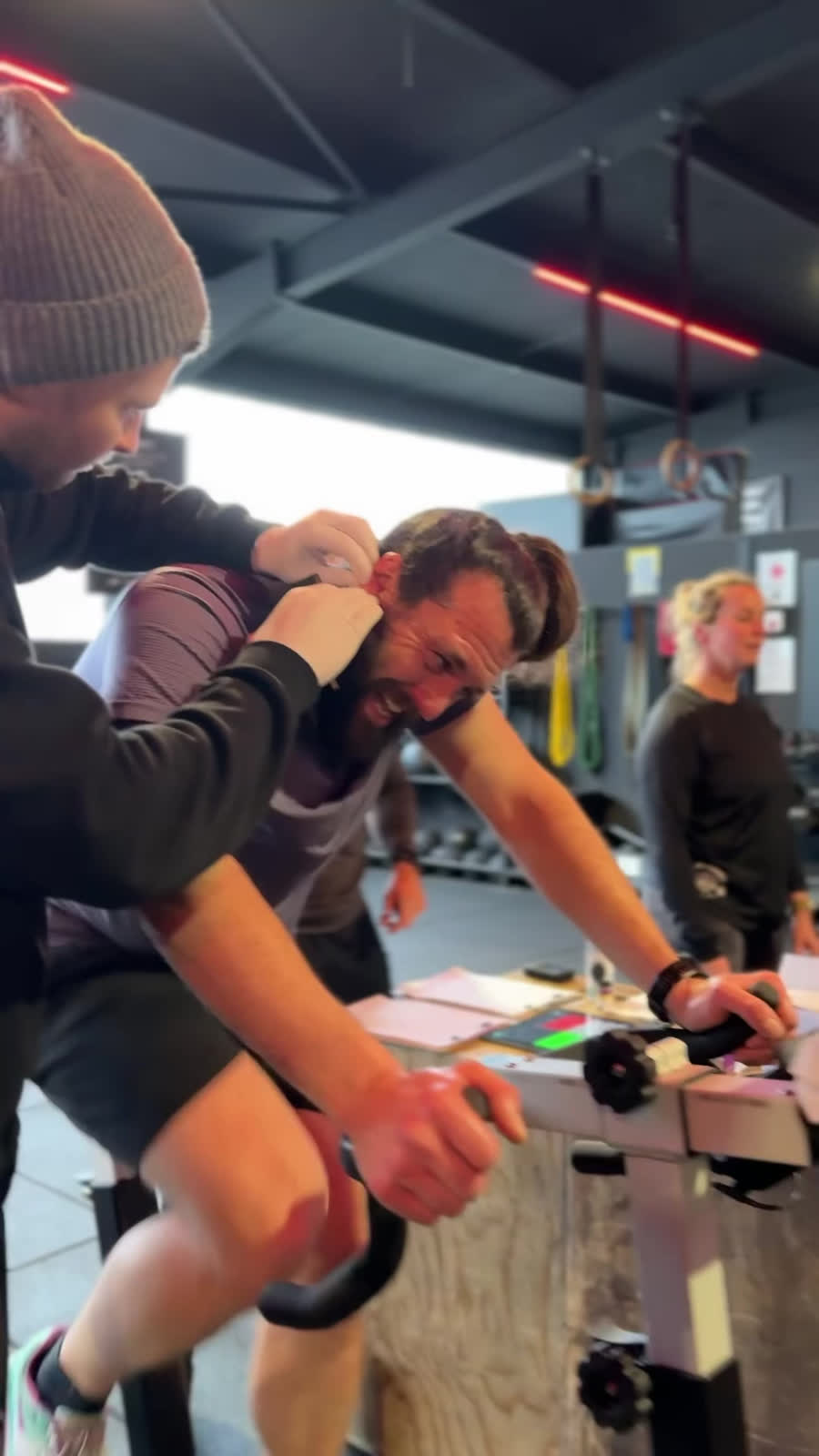
VO2max is trainable. How much you raise it depends less on effort than on the right two levers. Here is what the evidence actually supports, without the myths.
Why VO2max matters so much
The marker behind life expectancyVO2max describes how much oxygen your body can use under maximal exertion. It is one of the best single predictors of endurance capacity, and it is closely linked to life expectancy. In large cohort studies, higher cardiorespiratory fitness is consistently associated with a lower risk of death from any cause.
Each additional MET of fitness (roughly 3.5 ml/kg/min) is associated with about 13 percent lower all-cause mortality in large cohorts. The benefit keeps increasing into the highest values, with no visible plateau. Fitness is an association, not a guarantee, but few modifiable factors show a relationship this strong.
Two engines : delivery and extraction
Where VO2max is limitedTwo factors limit your VO2max. The first is delivery : how much oxygen-rich blood your heart can eject per beat (stroke volume and cardiac output). The second is extraction : how well your muscles actually use the oxygen that arrives (mitochondria and capillaries). Good training addresses both.
The two training levers that actually work
Intensity and volume, correctly combinedHigh-intensity intervals
Short, hard efforts are the strongest stimulus for fast VO2max gains. They load the heart above all, and mitochondria and capillaries in the muscle grow as well.
A large aerobic base
High volume in the easy range builds mitochondria and capillaries about as much as intervals do, and more sessions per week add to it. The foundation that makes the hard intervals bearable in the first place.
The message : intensity clearly beats steady continuous training when it comes to VO2max. The base still matters, it is what makes the intervals bearable in the first place.
Common mistakes
What costs you progress- Always training in the middle zone, too hard to build a base, too easy for a real stimulus.
- Intervals without a sufficient aerobic base, the load is not absorbed.
- Giving up too early : noticeable adaptation takes at least eight weeks.
- Steering by feel instead of by measured zones.
How to measure progress properly
Baseline, then retestA smartwatch estimates VO2max from heart rate and pace and can be off by a wide margin. A spiroergometry test measures the oxygen and carbon dioxide in your breath directly and gives you a precise value plus your training zones. Only a retest under identical conditions shows whether your training is working. At StoaVita you measure VO2max directly by spiroergometry and get your personal training zones with it, data-based instead of estimated.
Can VO2max be trained?
Yes. The two evidence-based levers are high-intensity intervals, the strongest stimulus for fast VO2max gains, and a large volume of easy base training. Mitochondria and capillaries in the muscle grow to a similar extent with both formats ; more sessions per week bring larger gains.
Which training raises VO2max the most?
In the underlying study, VO2max rose by 7.2 percent after eight weeks of 15/15 intervals, by 5.5 percent with 4×4 intervals and by about 1 percent with moderate continuous training. Intensity clearly beats steady continuous training ; the base is what makes the intervals bearable.
How long does it take for VO2max to improve?
A noticeable adaptation takes at least eight weeks. Stopping earlier usually means quitting before anything can be measured.
Which mistakes cost the most progress?
Always training in the middle zone, too hard to build a base and too easy for a real stimulus ; intervals without a sufficient aerobic base ; giving up too early ; steering by feel instead of by measured zones.
How do I measure my progress properly?
With a direct spiroergometry measurement as your baseline and a retest under identical conditions. A smartwatch only estimates VO2max and can be off by a wide margin.
Measure your starting point
Direct VO2max analysis with training zones, in Tübingen and the greater Stuttgart area.
Sources (primary literature)
- Helgerud J et al. (2007). Aerobic high-intensity intervals improve VO2max more than moderate training. Med Sci Sports Exerc 39(4):665-671. doi:10.1249/mss.0b013e3180304570
- Bassett DR, Howley ET (2000). Limiting factors for maximum oxygen uptake and determinants of endurance performance. Med Sci Sports Exerc 32(1):70-84. PMID:10647532
- Buchheit M, Laursen PB (2013). High-intensity interval training, solutions to the programming puzzle. Sports Med 43(5):313-338. doi:10.1007/s40279-013-0029-x
- Kodama S et al. (2009). Cardiorespiratory fitness as a quantitative predictor of all-cause mortality. JAMA 301(19):2024-2035. doi:10.1001/jama.2009.681
- Mandsager K et al. (2018). Association of cardiorespiratory fitness with long-term mortality. JAMA Netw Open 1(6):e183605. doi:10.1001/jamanetworkopen.2018.3605
- Mølmen KS, Almquist NW, Skattebo Ø (2025). Effects of Exercise Training on Mitochondrial and Capillary Growth in Human Skeletal Muscle: A Systematic Review and Meta-Regression. Sports Med 55(1):115-144. doi:10.1007/s40279-024-02120-2
This article is educational and does not replace medical advice. StoaVita provides longevity and performance coaching, not medical treatment.